At ClinMedica, we believe that restoring your hair starts with understanding the science behind the thinning. Identifying the specific causes of hair loss in women over 30 is essential for choosing a treatment that works for your unique physiology. Early intervention is the most effective way to protect your hair follicles and maintain long-term density.
So noticing a wider part or more hair in the brush can be an emotional experience for any woman in her 30s. While shedding 50 to 100 strands a day is a natural part of the hair growth cycle, excessive loss—known medically as alopecia often points to underlying biological or lifestyle shifts. At this age, your body is transitioning, and your hair often reflects those internal changes.
The Causes of Hair Loss in Women Over 30
The 30s are a decade of significant change. For many women, this is a peak time for career stress, family building, and shifting hormone levels. These factors can disrupt the natural balance where hair falls out and less grows in. Understanding what causes hair loss in women at 30 requires looking at the three primary drivers: hormones, nutrition, and stress.
1. Hormonal Fluctuations and Life Stages
Hormonal changes are the most common reason of hair fall in female over 30. This decade often includes pregnancy and the postpartum period, which triggers a sudden drop in estrogen, leading to diffuse shedding. Additionally, early signs of perimenopause or thyroid imbalances (hypothyroidism) can cause hair follicles to shrink, making the hair grow back finer and thinner.
2. Nutritional Gaps and “Hidden” Anemia
Your hair requires a constant supply of minerals and vitamins to stay in the growth anagen phase. Iron deficiency—even without full-blown anemia—is a leading cause of hair thinning in women over 30. Low levels of Vitamin D, Ferritin, Biotin and Zinc can starve the hair follicle, leading to brittle strands that break easily or fall out prematurely.
3. Chronic Stress and Telogen Effluvium
High cortisol levels from chronic stress can “shock” your system, forcing a large percentage of hair follicles into a resting state. This condition, called telogen effluvium, usually results in heavy shedding three to six months after a stressful period.
Identifying the Signs Of Hair Loss in Women
It is important to distinguish between temporary shedding and progressive thinning. Shedding is a volume issue (hair falling out), while thinning is a density issue (the new hair growing back is smaller). Common symptoms to watch for:
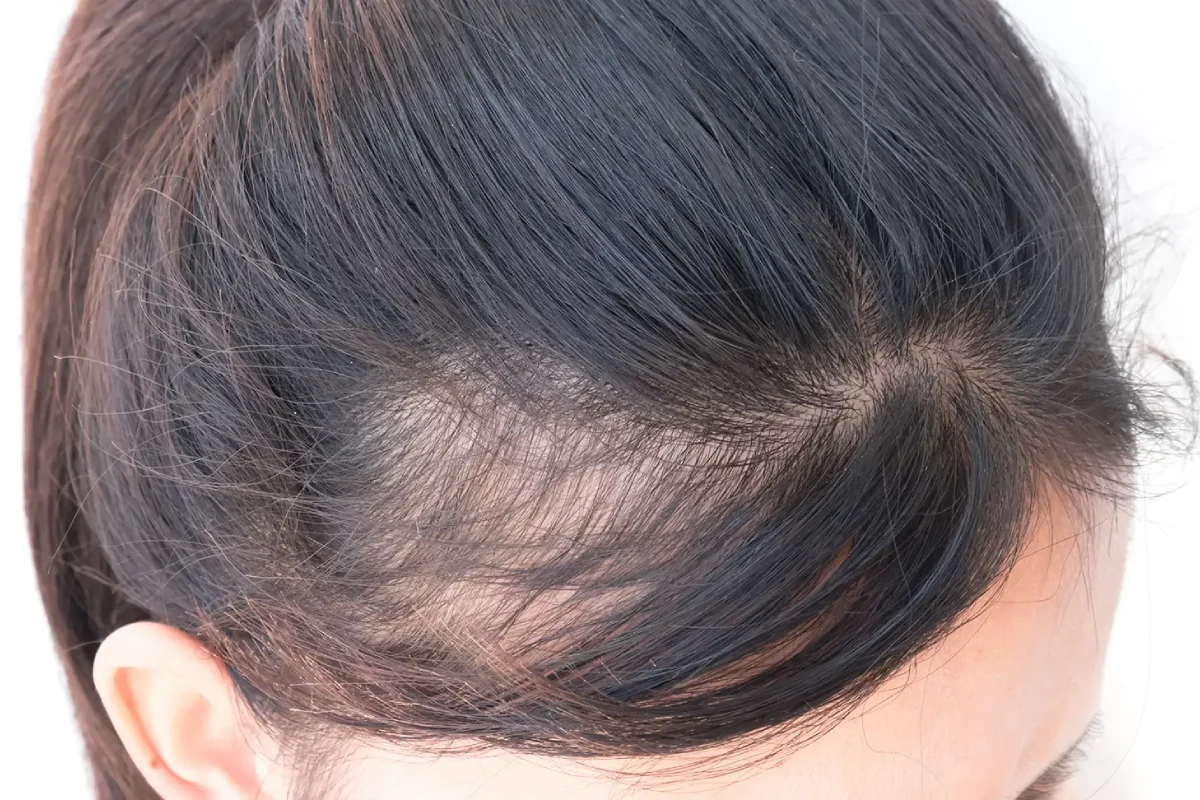
- The Widening Part: More scalp becomes visible along the top of your head.
- Smaller Ponytails: You notice a significant decrease in the thickness of your hair when tied back.
- Vellus vs. Terminal Hair: You see short, fine, “peach fuzz” (vellus hair) replacing thick, dark (terminal) hair.
- Scalp Visibility: Seeing your scalp through your hair under bright lights or when wet.
| Hair Condition | Key Characteristics | Likely Duration |
|---|---|---|
| Normal Shedding | 50–100 hairs per day; consistent volume. | Ongoing/Natural |
| Telogen Effluvium | Sudden, heavy shedding across the whole scalp. | 3–9 months (Temporary) |
| Androgenetic Alopecia | Gradual thinning at the crown; widening part. | Progressive (Needs Management) |
| Traction Alopecia | Thinning along the hairline due to tight styles. | Reversible if caught early |
What are the Advanced Diagnostic Steps at the Clinic?
To treat the cause and not only the symptom, we look beyond the surface. A professional evaluation with ClinMedica experts involves a detailed analysis of your scalp health and systemic wellness. What to expect during your consultation:
- Digital Scalp Analysis: Using high-magnification imaging to assess follicle density and scalp inflammation.
- The Pull Test: A gentle examination to determine the percentage of hairs in the shedding phase.
- Recommended Blood Panels: We often suggest testing for TSH (Thyroid), Ferritin (Iron), and Vitamin D3 to rule out internal triggers.
What are the Proven Treatments for Hair Restoration?
There is no “one-size-fits-all” cure, but there are several medically-guided options that have shown significant results in women.
- PRP & PRF Therapy: Platelet-Rich Plasma (PRP therapy) and its advanced version, Platelet-Rich Fibrin (PRF), use your own growth factors to “reboot” dormant follicles. PRF releases these factors over a longer period, making it highly effective for persistent thinning.
- Mesotherapy: A targeted cocktail of vitamins and medications injected directly into the scalp to nourish the hair at the root.
- Topical Minoxidil: An FDA-approved lotion that helps widen blood vessels and prolong the growth phase of the hair.
- Hair Transplant for Women: For those with permanent loss or stable thinning patterns, modern FUE (Follicular Unit Extraction) offers a natural-looking, high-density result.
The Psychological Aspect of Coping and Styling
Hair loss is not just a physical change; it is an emotional one. While waiting for treatments to take effect, there are several ways to manage the psychological impact and boost your confidence.
- The Power of Styling: Switching to a shorter, layered cut can create the illusion of volume. Changing your hair color or adding highlights can also help camouflage a widening part.
- Sulfate-Free Care: Use volumizing shampoos that avoid harsh detergents, which can weigh down fine hair or irritate a sensitive scalp.
- Support and Acceptance: Talking about your journey with friends or a professional can reduce the stress that often exacerbates hair fall.
Frequent Questions and Answers About Hair Loss
Can I prevent hair loss in my 30s?
While you cannot change your genetics, you can prevent many causes of hair thinning in women over 30 by maintaining a nutrient-dense diet, managing stress, and avoiding high-tension hairstyles that pull on the follicles.
How long does it take to see results from treatment?
Hair grows slowly. Whether you are using PRP or medical lotions, it typically takes 3 to 6 months to see a noticeable difference in density and a reduction in shedding.
Is PRP better than just taking vitamins?
Vitamins only help if you have a deficiency. PRP/PRF therapy works on a cellular level to stimulate the follicle directly, making it a more powerful tool for those with androgenetic or stress-related thinning.
In Summary: Get to Know About Causes of Hair Loss in Women Over 30
In the end, the causes of hair loss in women over 30 are manageable when you have the right diagnostic tools and expert guidance. You don’t have to wait for the thinning to become permanent. Whether you are experiencing the first signs of a wider part or dealing with heavy postpartum hair loss, taking action now preserves your options for the future.
- Identify the Trigger: Is it stress, hormones, or diet?
- Support the Follicle: Use targeted treatments like PRF or Mesotherapy.
- Be Patient: Give your hair the 4-6 months it needs to cycle back to growth.
Ready to see a difference? Book a professional scalp evaluation with ClinMedica today. Let our experts design a personalized plan to restore your hair’s volume and your confidence.
Medical Disclaimer:
This article was medically reviewed by our surgeons at ClinMedica, including our medical staff. It is intended for informational purposes only and does not replace a professional medical consultation.
Learn more about how we create and review our content by visiting our Content Policy.